I’ve been thinking about curiosity a lot lately.
It started on a trip from London yesterday, after a modelling event, when my mind wandered to Iris Apfel. If you’ve read my recent post about her, you’ll know that Iris was the American fashion icon who signed a modelling contract at 97, had her own Barbie made in her likeness, and was still running her business when she died at 102. She called herself a “geriatric starlet,” which I think is one of the finest things anyone has ever called themselves.
But the more I thought about Iris, the more I realised that her extraordinary life wasn’t really about fashion at all. It was about curiosity. A relentless, unself-conscious, lifelong curiosity about the world and her place in it.
Iris said: “If you don’t learn constantly, you don’t grow and you will wither. Too many people wither on the vine.”
She also said: “Great personal style is an extreme curiosity about yourself.”
Curiosity is not a personality trait. It’s a choice.
I think we tend to treat curiosity as something you either have or you don’t. As though some people are born endlessly interested in the world and others simply aren’t. But I don’t believe that. I’ve spent decades working with people, in boardrooms, in workshops, across four continents, and what I’ve noticed is that the people who thrive, genuinely thrive, are the ones who never stopped asking questions. Not just about their work or their industry, but about themselves. About other people. About what’s possible.
Curiosity keeps you in the game. It keeps you relevant, connected, and, frankly, it keeps you interesting. As Iris herself put it: “If you’re not interested, you’re not interesting.” Blunt perhaps. But right.
What happens when we stop being curious
I’ve watched it happen. Quietly, gradually, without anyone quite noticing. A person reaches a certain point in life, perhaps a milestone birthday, a redundancy, a loss, and they decide, consciously or not, to stop reaching outward. To stop asking what’s next. The world shrinks a little. Then a little more…
It isn’t laziness. It’s usually fear, or exhaustion, or the creeping belief that curiosity is somehow indulgent at a certain age. That the time for new things has passed.
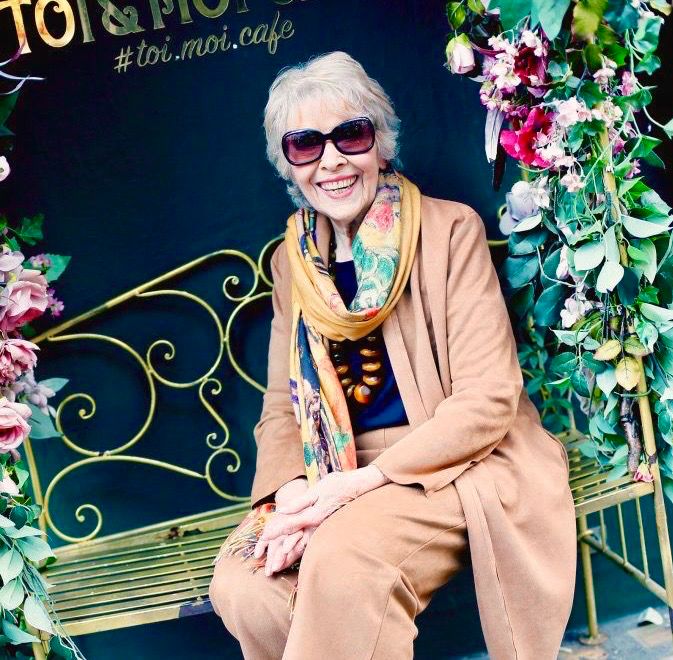
But what I know at my tender age of 85 years is that your belief is a choice. And it’s one worth challenging.
Curiosity in practice
For me, it has looked like many things over the years. Travelling alone to places where I didn’t speak the language and finding other ways to communicate. Starting a business at 50 when plenty of people thought the sensible thing was to wind down. Taking up modelling in my 80s, not because I planned to, but because the opportunity arrived and I thought, why not?
Iris didn’t plan her career as a fashion icon either. She just kept following what interested her, kept saying yes to the things that made her curious, and the life she built was extraordinary as a result.
That wasn’t luck. That’s curiosity, sustained over a lifetime.
A question worth sitting with
Aldous Huxley once said: “The secret of genius is to carry the spirit of the child into old age, which means never losing your enthusiasm.”
I’d add curiosity to that. The two tend to travel together.
So here is the question I’d leave you with. Not what have you achieved, not where have you been, but this: what are you still curious about? What question haven’t you answered yet? What door haven’t you opened?
Because if there’s an answer to that question, even a small one, that’s where your next chapter might begin.