The Conversation That Needs to Happen
There’s a movement growing, and I’m genuinely heartened by it. Jacqueline Freeman, a wonderfully straight-talking woman from New Zealand, runs a platform called 58 & Unapologetic. Her whole mission is built on a truth that many of us recognise: ageism is real, and you’re not imagining it. One post she wrote was seen over 180,000 times because it hit a nerve. That’s what happens when someone dares to say the difficult things out loud.
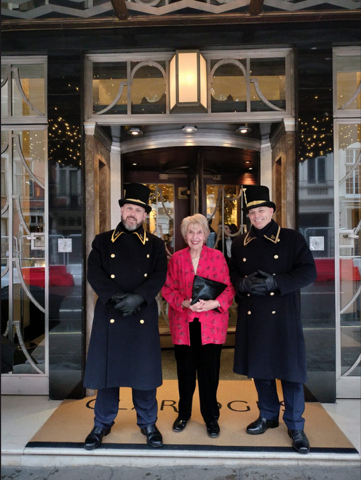
Here in the UK, I’ve sat in rooms where the conversation changed slightly when I walked in. I’ve been on the receiving end of a particular kind of polite surprise. “You’re still working?” Yes. Still working, still thinking, and still contributing. And still modelling, as it happens.
The fashion industry’s growing recognition of mature women is wonderful and necessary. But let’s not mistake a trend for a transformation. As Helen rightly noted in her post, true inclusivity goes far beyond age. It’s about body diversity, accessibility, and moving away from tokenism towards something genuinely real. One silver-haired woman on a campaign doesn’t rewrite the rules. It’s a beginning, yes, but not a destination.
What Lived Experience Really Means
I want to say something about this phrase “lived experience.” It doesn’t simply mean “being old.” It means something much richer and, I’d argue, much more useful.
My career has taken me across continents. I’ve facilitated change in boardrooms from London to Macedonia. I’ve navigated conflict, built teams, helped leaders find clarity in the middle of chaos. I’ve also lost my husband, downsized from the home I loved for thirty years, and rebuilt my life with deliberate joy. I’ve swum with dolphins in Hawaii and trekked to the Mongolian border armed with three words of Russian and an absolute refusal to let language be a barrier.
That’s lived experience. That’s what walks into the room with me. And that’s precisely what gets filtered out when ageism does its quiet, insidious work.
Jacqueline Freeman describes wisdom as “the next big disruption.” I think she’s talking about something important. We’re so obsessed with what’s new, what’s next, and what can be automated or accelerated, that we’re actively discarding the one thing that genuinely can’t be replicated or downloaded: the hard-won, hard-earned perspective that only decades of living can give you.
The Stories We Tell Ourselves
Ageism isn’t only something that happens to us from the outside. Sometimes, we internalise it. We start to believe the quiet story that says we’re past it, that we should make way, that our best contributions are behind us.
I understand that story, because I’ve heard it whispered. But I’ve never chosen to live by it.
My philosophy, which I explore in my book Flashpoint Transformation: Life’s Choices, is simply this: say yes to life. Every single chapter of it. The S.E.L.F. model I developed over decades of practice (Situation, Emotion, Logic, Focus) is essentially a way of cutting through the noise and reconnecting with what you genuinely want, rather than what fear or habit or other people’s expectations tell you to want.
And what I want, at 85, is to keep going, to keep modelling, to keep facilitating. And to keep writing and speaking and connecting with people who are navigating their own flashpoints.
When Experience Becomes a Service
Lived experience isn’t just a philosophical concept. It has practical value too. And one of the ways I put mine to work is through the Focus Sessions I offer through my practice.
These are 47-minute, one-to-one Zoom sessions designed for exactly the moments that Jacqueline Freeman talks about so powerfully on her platform: the moments when you feel filtered out, passed over, stuck, or unsure of your next move. You come with one specific situation. We work through it with structure and clarity, and you leave with a plan you can act on immediately.
What makes these sessions different from a general coaching conversation is the depth that only decades of experience can bring. I’m not working from a textbook. I’m drawing on a career that has taken me from senior corporate roles to founding my own consultancy, Prime Objectives, at 50, to facilitating change across cultures on multiple continents. I’ve sat in rooms where the stakes were very high and helped people find their way through. That’s what walks into the session with me.
The S.E.L.F. model gives the session its shape. It cuts through the noise, separates facts from assumptions, and creates the kind of clarity that feels almost startlingly simple once you have it.
I say this not to sell you something, but because it’s a living example of the very argument I’m making. Wisdom isn’t ornamental. It’s useful. It solves problems. And it gets sharper, not duller, with age.
To the Women Who Wonder If It Is Too Late
Helen ended her post with something that stayed with me. She wrote: “For those thinking it’s too late to step into this industry… it isn’t. In fact, it might just be your time.”
I want to say the same thing, more broadly. It’s not too late. For any of it.
If you’re looking at your life and wondering whether the world still has room for you, whether your experience is still relevant, whether you have anything left to offer, I want you to hear this clearly: the question itself is the result of ageism doing its work on you. The answer is no. It’s not too late. You’re not past it. Your experience isn’t a liability. It is, in fact, the most valuable thing in the room.
I didn’t become a model at 84 despite my age. I became a model at 84 because of everything my age represents, the presence, the groundedness, and the absolute lack of interest in performing a version of myself that doesn’t exist.
Jacqueline Freeman describes her community as people who refuse to fade. I rather like that. Not fighting or raging, and not trying to be younger. Simply refusing to disappear.
A Note on What Comes Next
The shift happening in fashion, in media, in the way older women are beginning to be represented, is real and it warrants attention. But it’ll only stick if it goes deeper than aesthetics. It needs to touch the workplace, the hiring process (Jacqueline writes brilliantly about algorithms filtering out experienced candidates before a person ever sees a CV), the healthcare conversation, the cultural stories we tell about what a full and meaningful life looks like.
Lived experience isn’t a comfort blanket for the older worker. It’s a competitive advantage for any organisation wise enough to value it.
And for those of us who carry it? It’s simply who we are.
I refuse to let a number on my birthday card determine the life I’m going to live.
I never have and I never will.